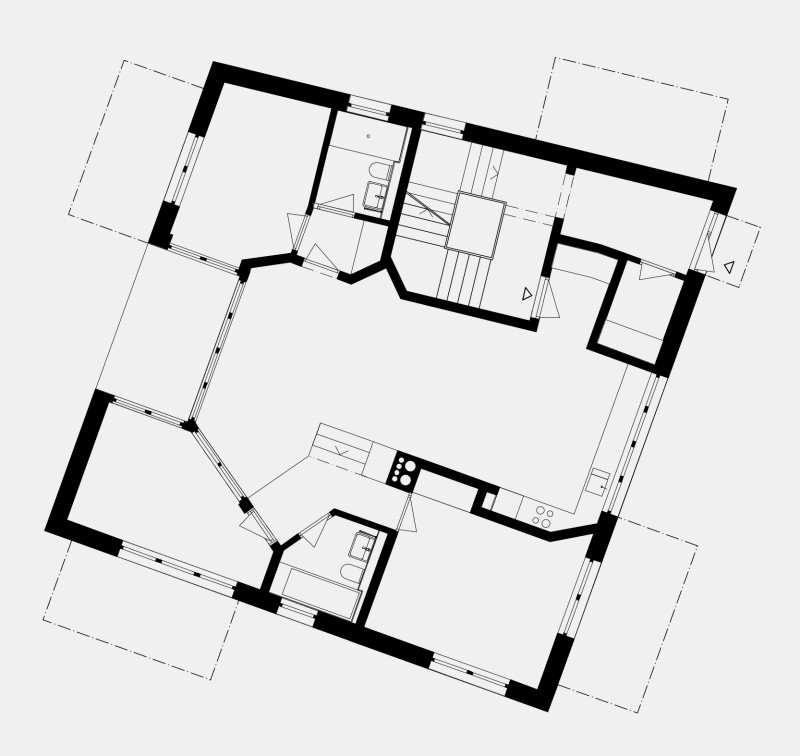
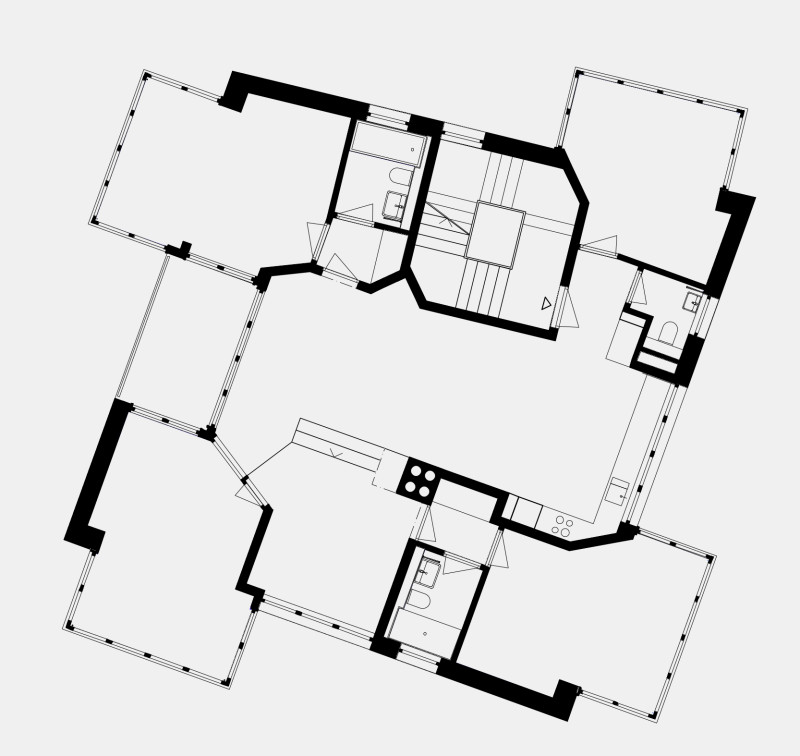
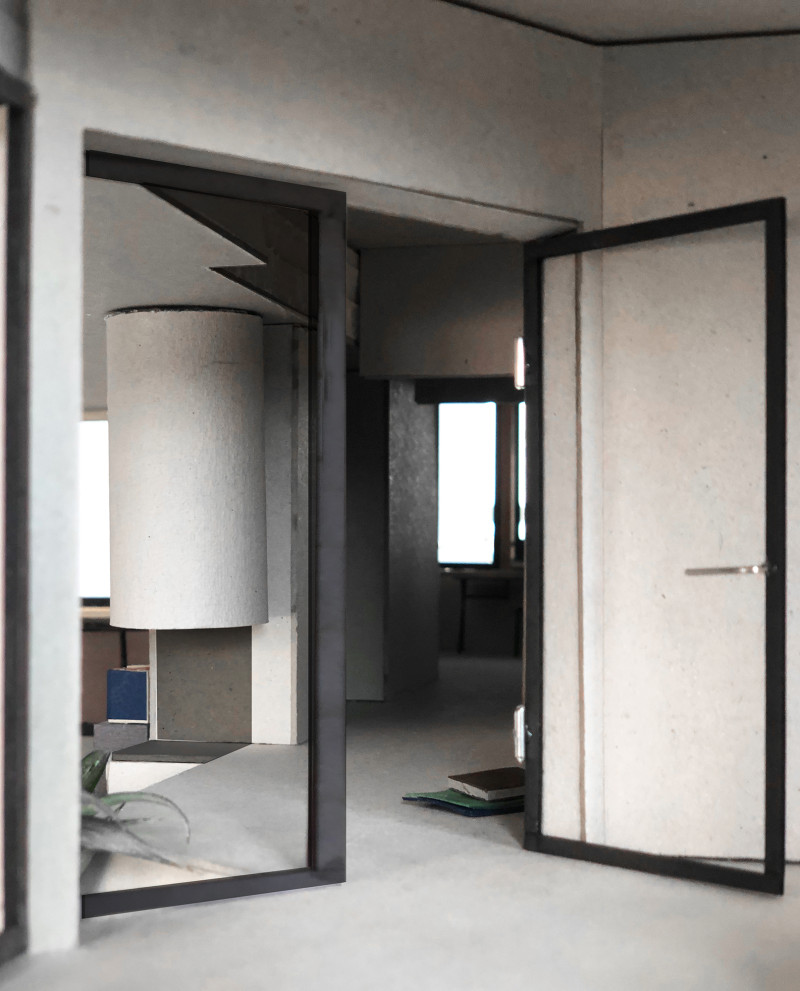
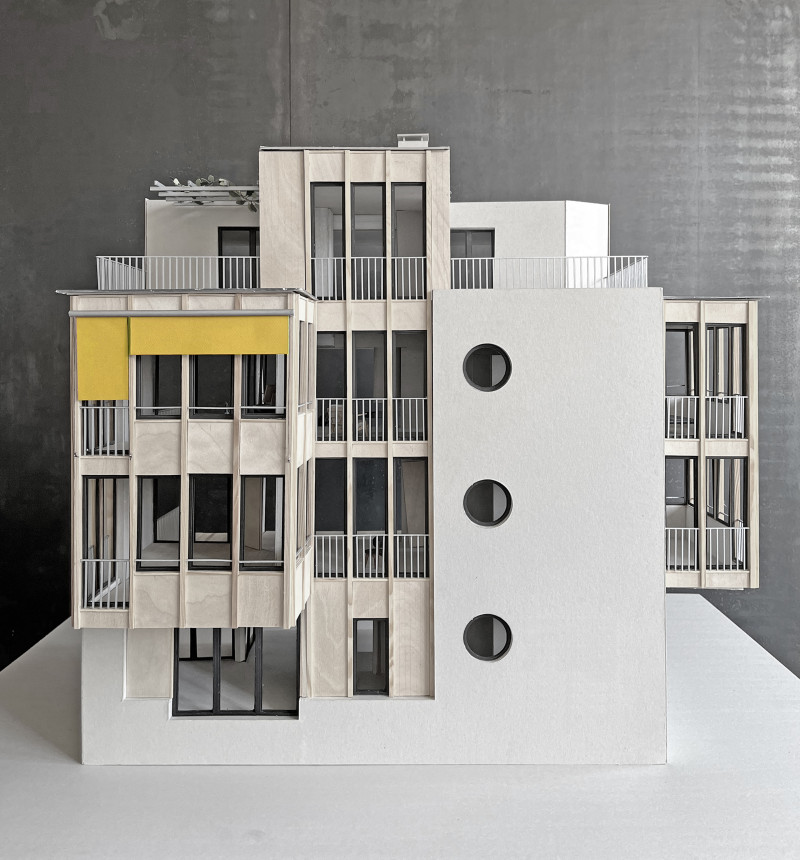
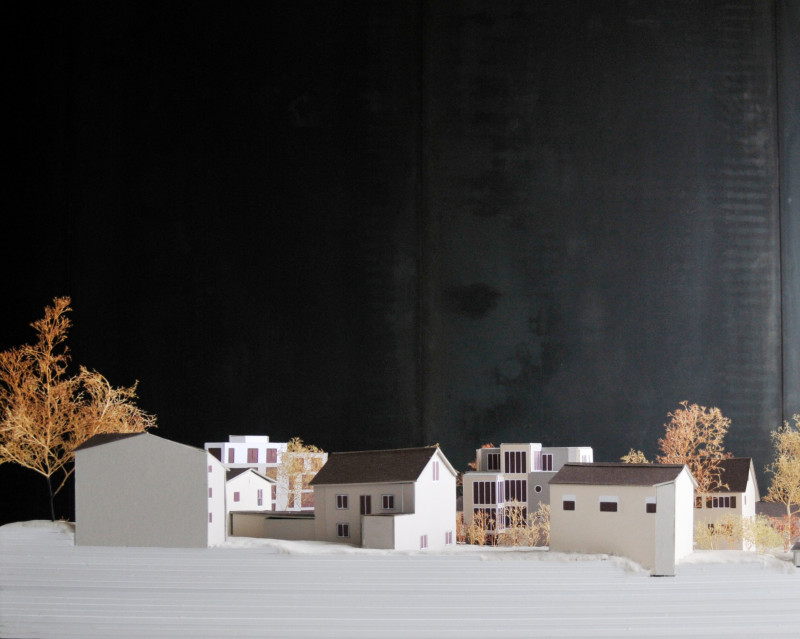
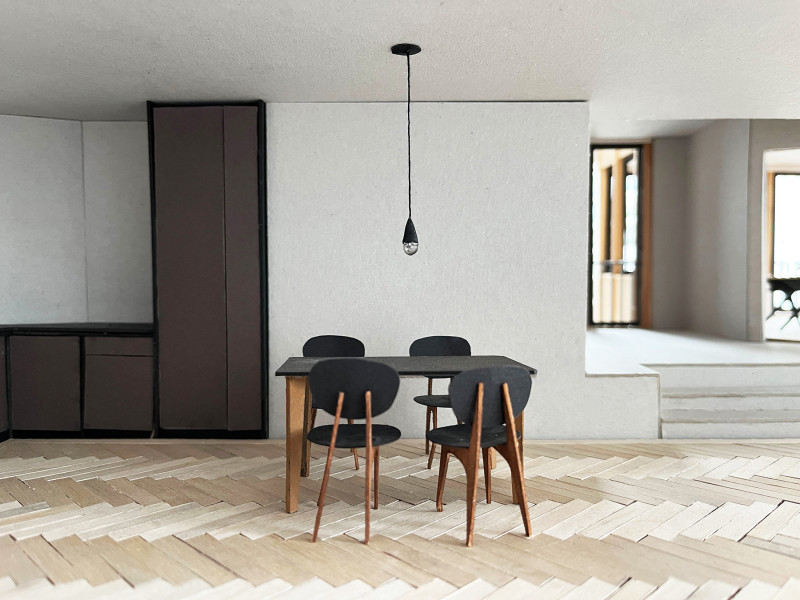
A house with four bay windows and two levels is embedded in the topography by a spatially perceptible split. At each of the four corners of the house, cantilevered situations merge with the spaces behind them, creating generous, polygonal rooms with both open and closed niches and a strong, three-side connection to the garden. Together with the serving spaces, this defines the corners of the building. In between, a less exposed, open living space is spread as a a topography over two levels, oriented on three sides. In combination with the cantilevered bay windows, the sides of the building are differentiated by house-high panels of in-situ concrete, interspersed with staggered, structurally open sections in timber construction. Both structurally and in terms of surfaces, wood and concrete interact both inside and outside. Polygonal split ceilings with cantilevers and load-bearing, multi-bent slabs are made of in-situ concrete. All other wall constructions are timber frame structures.

080 Lavendelweg 21
080 21
080 Lavendelweg 3
080 3
080 Lavendelweg 1
080 1
080 Lavendelweg 7
080 7
080 Lavendelweg 8
080 8
080 Lavendelweg 5
080 5
080 Lavendelweg 22
080 22
080 Lavendelweg 2
080 2
080 Lavendelweg 33
080 33
080 Lavendelweg 27
080 27
080 Lavendelweg 25
080 25
080 Lavendelweg 24
080 24
080 Lavendelweg 30
080 30
080 Lavendelweg 28
080 28

Planning and Construction 2020-2025
Fotos: Rasmus Norlander, Abraha Achermann